
Embodied AI Data Collection / EGO R9 Field Notes / Aug 13, 2026
Fueling Embodied AI: Turning Human Expertise into High-Fidelity Training Data
Why first-person demonstrations are becoming the essential bridge between capable AI models and robots that can work safely in the physical world.
The race toward general-purpose robotics has entered a new phase. Algorithms are stronger, compute is more accessible, and simulation can generate enormous volumes of synthetic experience. Yet a stubborn bottleneck remains: robots still need high-quality evidence of how people perceive, decide, and act in the messy physical world.
Third-person video can document that a task happened, but it often loses the details that explain how it happened. A distant camera may miss the pressure of a fingertip, the angle of a tool, the moment an object becomes occluded, or the visual cue that caused an expert to change course. First-person data keeps hands, tools, objects, and the working environment in the operator's natural field of view.
That viewpoint gives an embodied AI system three especially useful signals. It preserves hand-object dynamics such as grasping, twisting, aligning, and releasing. It records contextual awareness from the operator's position, including depth cues, occlusions, and spatial relationships. It also captures workflow logic: the real sequence of preparation, action, inspection, correction, and completion.
The EGO R9 is designed as a professional, head-mounted data acquisition tool for this kind of work. Its hands-free form lets participants carry out familiar tasks with minimal interruption. A 120-degree wide-angle view helps keep the active workspace and both hands visible, while 1080P global-shutter video is suited to motion-rich scenes where rolling-shutter distortion can reduce the value of fine interaction data.
Visual evidence becomes more useful when it can be aligned with motion. EGO R9 combines video with a 6-axis IMU sampling above 200 Hz, shared clock support, and global timestamps. These capabilities help data teams organize head movement, task markers, spoken notes, and annotations along one R9 recording timeline.
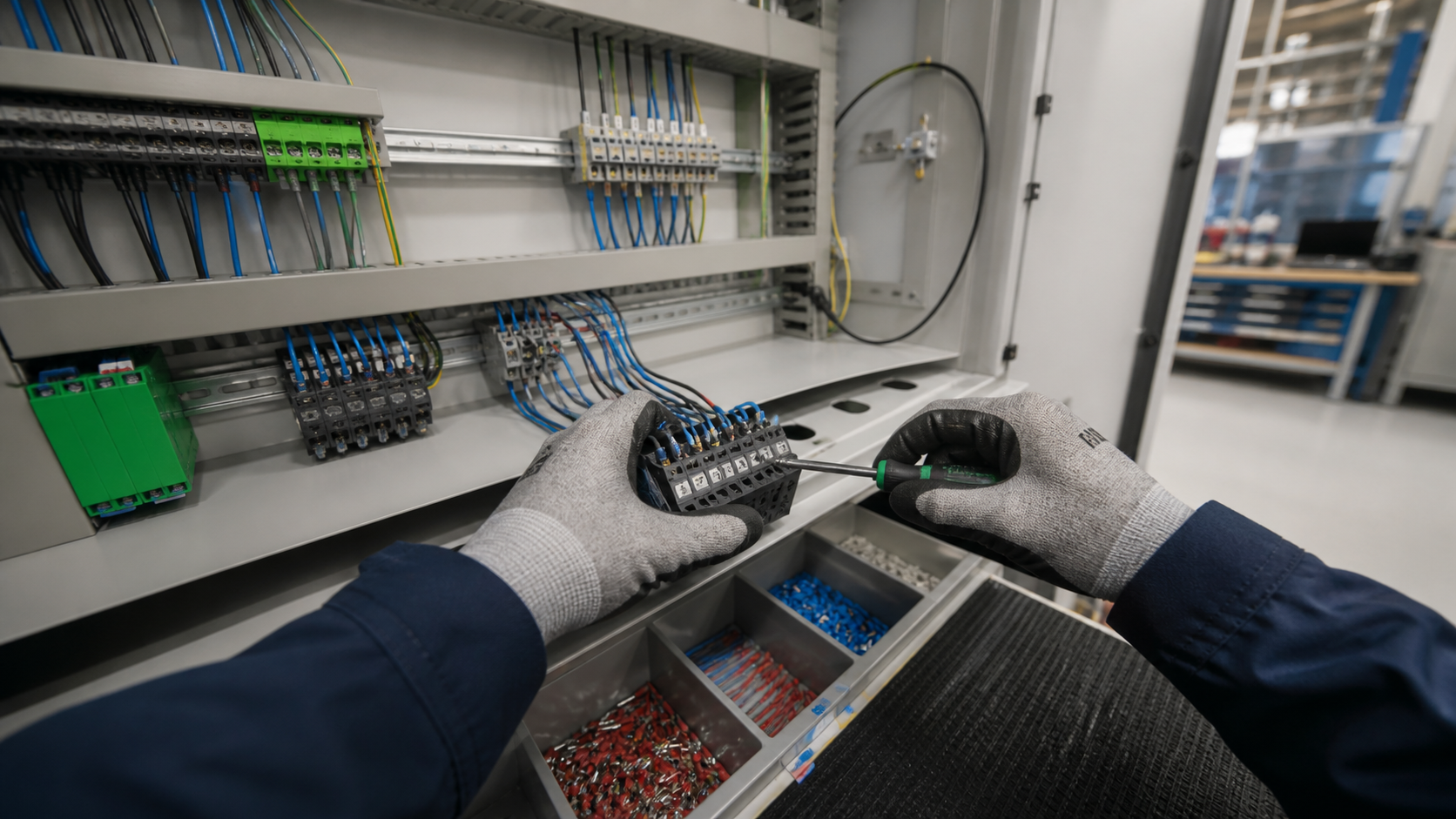
Consider an industrial electrician assembling a control panel. It is the complete demonstration: selecting a component, reading the workspace, positioning a wire, stabilizing the terminal, applying a tool, checking the connection, and recovering from an unexpected fit. Captured from eye level, these small decisions become visible training evidence.
The same principle applies to woodworking, maintenance, logistics, laboratory work, and other skilled trades. A strong collection program records routine success alongside authentic variation, defines task and environment metadata, reviews framing early, and protects private screens, bystanders, and proprietary information. Safety procedures and required PPE always take priority over camera placement or capture targets.
High-fidelity egocentric data is the fuel that can help Large Action Models and embodied AI systems generalize across objects, improve fine motor behavior, and learn human safety boundaries.