Common hardware synchronization
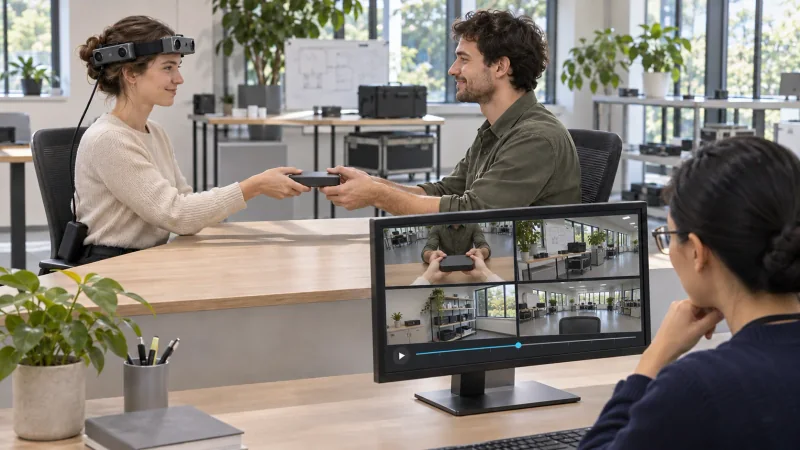
All cameras are synchronized to a common hardware trigger/shutter signal.
EGO R10 · Multi-view egocentric camera
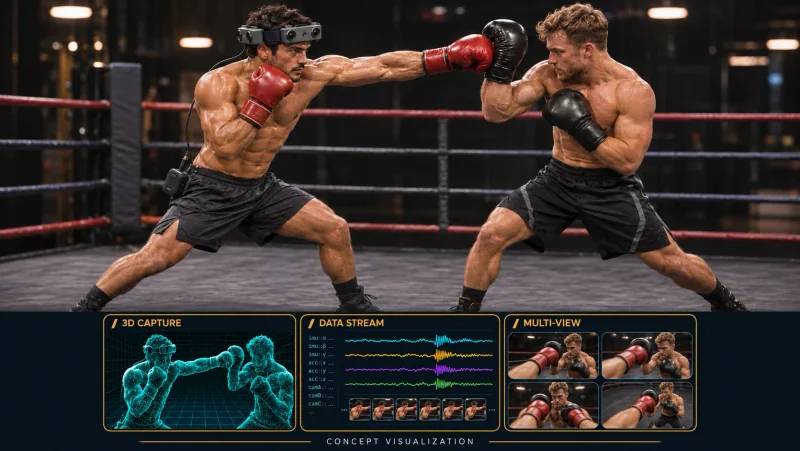
R10 is a multi-view egocentric camera for human demonstration capture: 1600 × 1200 at 30 fps, common camera hardware synchronization, USB 2.0 and configurable 100 / 200 / 500 Hz IMU sampling.
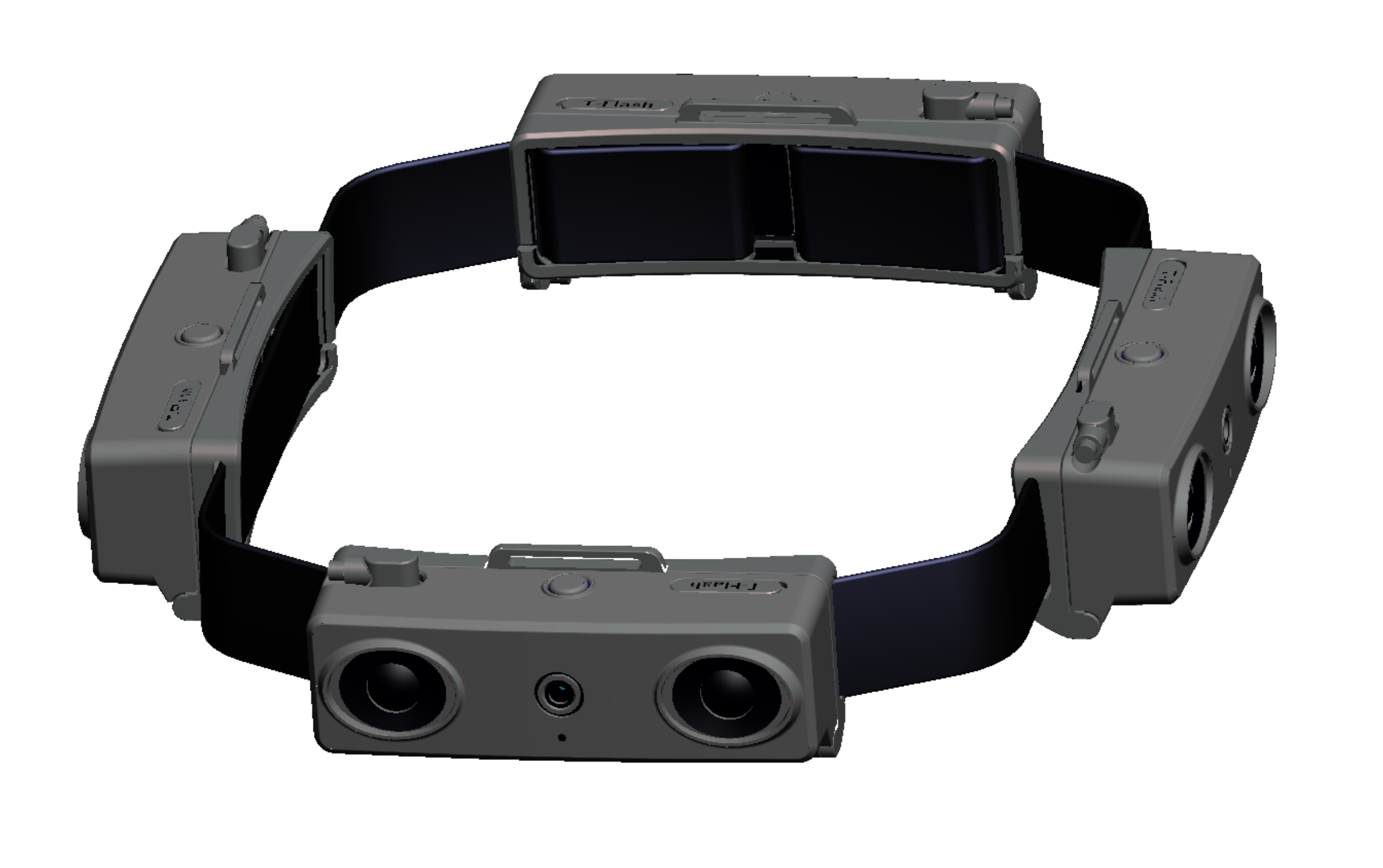
EGO R10 product render supplied with the specification tables.
R10 capture features
All cameras are synchronized to a common hardware trigger/shutter signal.
1600 × 1200 resolution at 30 fps, with a listed diagonal / horizontal / vertical field of view of 180° / 115° / 80°.
Built-in 6-axis IMU in head and wrist units where required. Sampling rates: 100 / 200 / 500 Hz.
USB 2.0 interface with MJPG, H.264 and H.265 output formats. DC 5 V supply; maximum working current 320 mA.
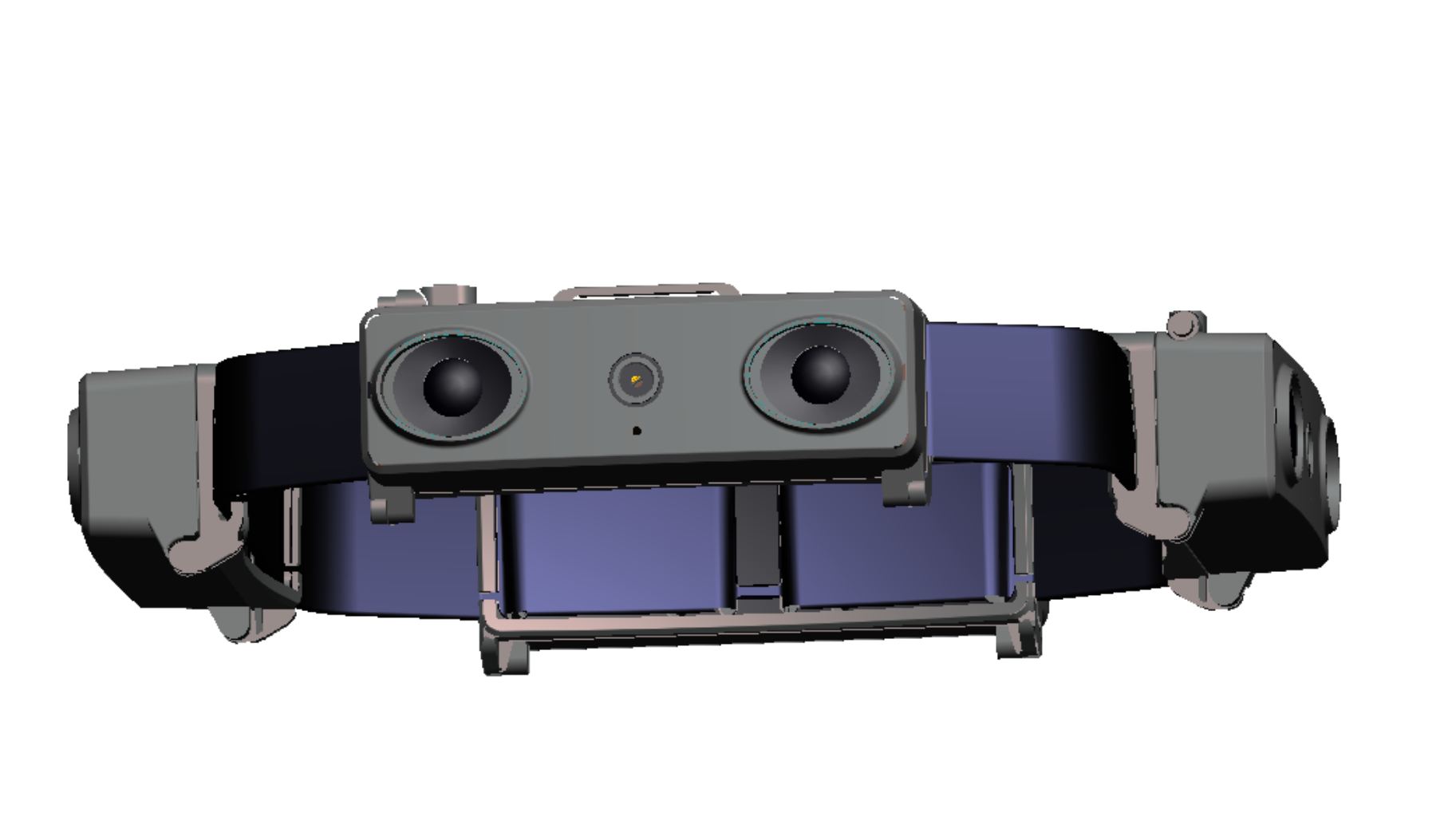
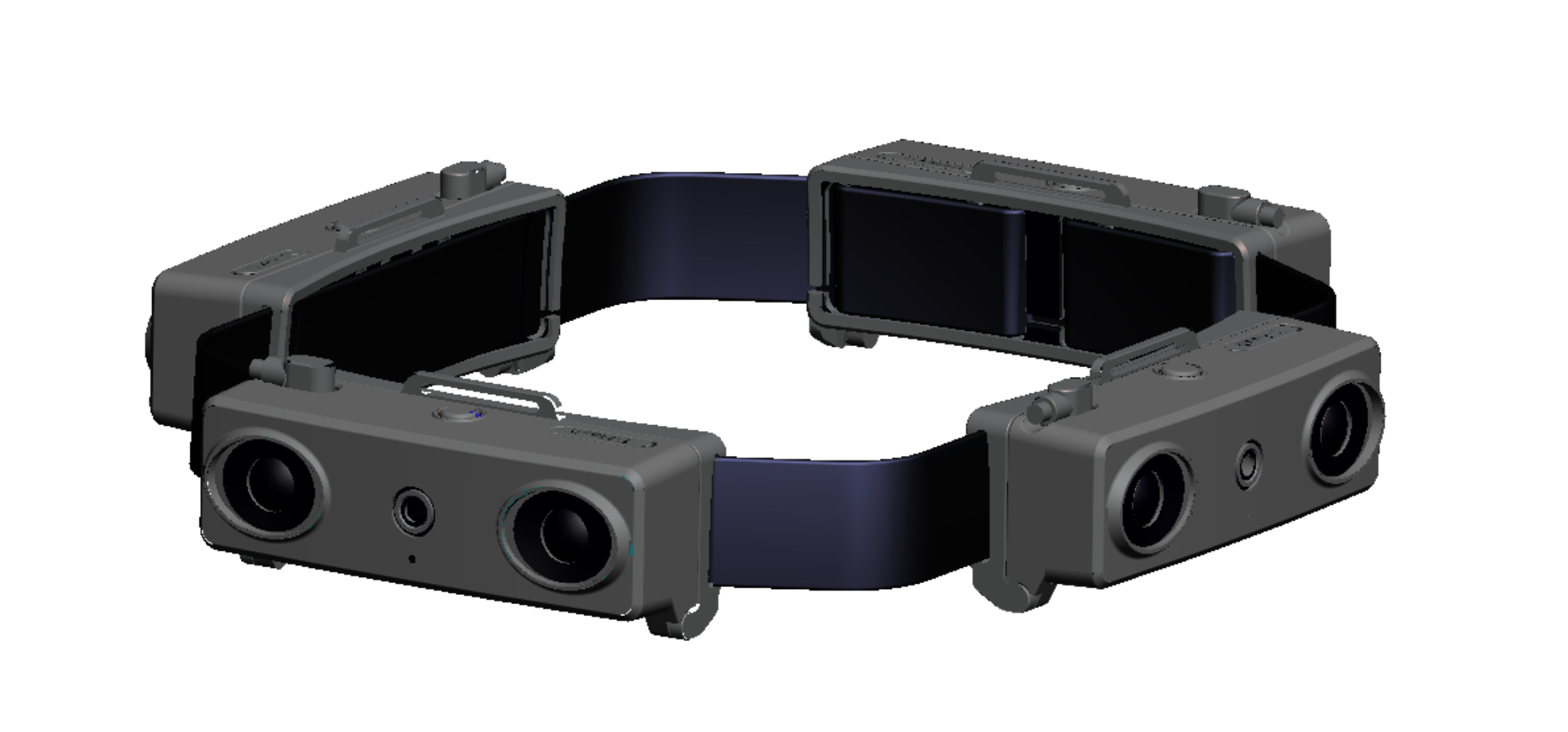
R10 product views
R10 specifications
Values transcribed from the supplied R10 specification tables.
| Parameter | R10 specification |
|---|---|
| Model | R10 |
| Resolution | 1600 × 1200 |
| Frame rate | 30 fps |
| Sensor size | 1/2.6 inch |
| Pixel size | 3.0 μm × 3.0 μm |
| Dynamic range | Linear mode: 61.56 dB / HDR mode: 91.56 dB |
| Field of view | Diagonal: 180° / Horizontal: 115° / Vertical: 80° |
| Lens TTL | 15.15 ± 0.3 mm |
| Focus type | Fixed focus |
| Interface | USB 2.0 |
| Output format | MJPG / H.264 / H.265 |
| Automatic controls | Saturation, contrast, acutance, white balance and exposure |
| Wi-Fi & Bluetooth | Optional; price varies with configuration |
| T-Flash card slot | Optional; price varies with configuration. T-Flash card not included |
| Built-in battery | No built-in battery; requires an external battery |
| Functions | Dual-camera synchronization, dual-camera ranging, dual-camera calibration, 3D reconstruction, VR vision and depth detection |
| Voltage | DC 5 V |
| Working current | Maximum 320 mA |
| PCB size | 100 × 94 × 60 mm |
| Hardware synchronization | All cameras synchronized to a common hardware trigger/shutter signal |
| IMU | Built-in 6-axis IMU in head and wrist units where required |
| IMU sampling rate | 100 / 200 / 500 Hz |
Source tables: Imaging specifications · System specifications.
R10 questions and answers
Answers for teams evaluating EGO R10 for multi-view egocentric data collection, human demonstrations and 3D research workflows.
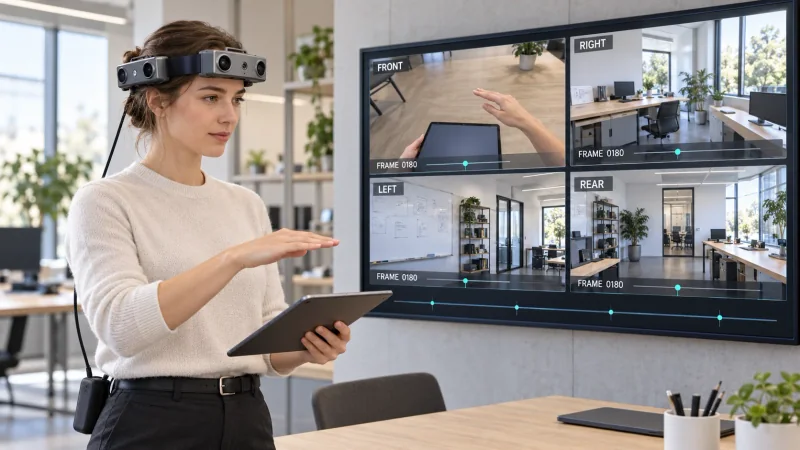
R10 is a head-mounted camera system that records from multiple viewpoints around the wearer. The product specification lists 1600 × 1200 imaging at 30 FPS and common camera hardware synchronization, providing corresponding visual observations of a demonstrated activity.
The R10 specification states that all cameras are synchronized to a common hardware trigger or shutter signal. Keep the camera identifiers and corresponding recordings together so the research team can review the same stage of an activity across the captured views.
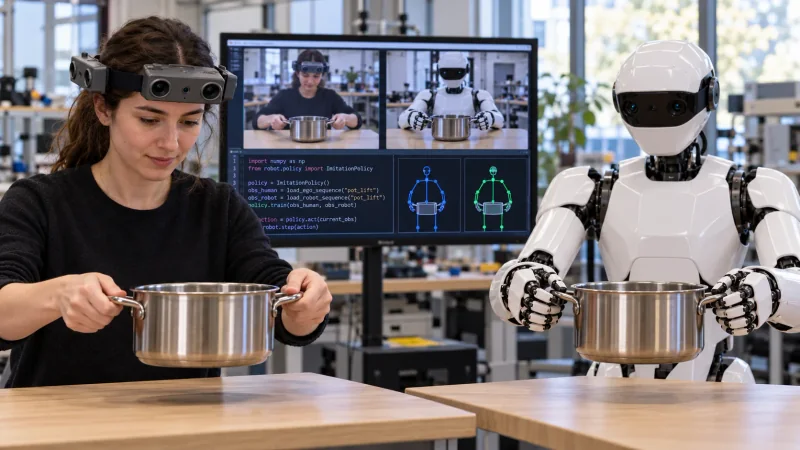
Choose a defined demonstration, identify each R10 camera view and inspect a short pilot of the actual task. Preserve complete takes with their view identifiers and capture settings. The research team then reviews the multi-view human demonstration data and prepares the labels for its learning study.
R10 records synchronized camera views of the demonstration. Researchers can review the visible hands, object and contact phases in those recordings, then prepare annotations and run their chosen hand-object analysis workflow using the captured evidence.
At each important task phase, check which recorded views show the hands and object clearly and note any partial coverage. Keep those reviewer-created visibility notes linked to the camera view and take, so the team can select useful intervals for its analysis.
The R10 specification describes a built-in 6-axis IMU in head and wrist units where required, with 100, 200 and 500 Hz sampling options. When the delivered configuration includes an IMU, record the selected sampling rate and keep the available motion data with the session.
R10 uses a USB 2.0 interface and a DC 5 V supply, with a specified maximum working current of 320 mA. The product specification states that it uses an external battery. Document the capture connection and power arrangement used for the collection.
The R10 specification lists dual-camera calibration and 3D reconstruction among its application functions. For a spatial research collection, preserve the corresponding camera recordings, document the capture configuration and calibration used by the project, and have the research team process and evaluate the resulting data.
R10 application blogs
Talk to the product team
Planning embodied AI data collection? Share the demonstration task, required camera views, IMU rate, optional features and quantity. Researchers can organize the recordings and reviewed task labels for a robot imitation learning dataset.