
Custom Data Collection Hardware / TINTELE GLOBAL CO., LIMITED EGO R9 Solutions / Aug 26, 2026
From Prototype to Fleet: Building Scalable Egocentric Data Collection with EGO R9
Robotics data programs rarely move directly from one prototype to hundreds of devices. EGO R9 gives teams a confirmed first-person capture foundation while engineering, validation, and manufacturing controls support the path from concept to pilot fleet.
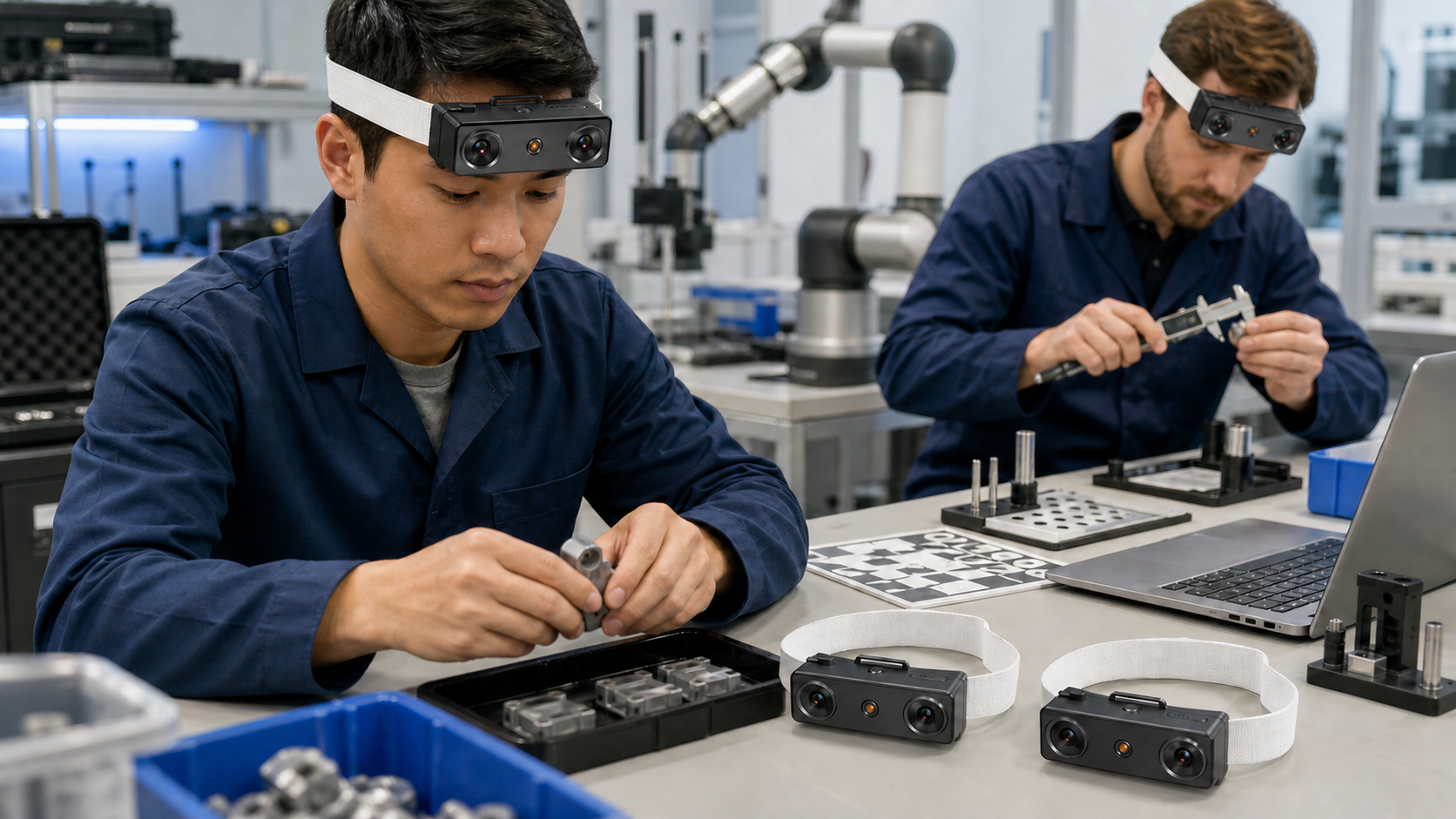
A robotics team may begin with one question: can a wearable camera capture the hands, tools, objects, and motion needed for a specific learning task? Answering that question takes only a few devices. Building a dependable data-collection operation takes much more. The hardware must remain comfortable, repeatable, supportable, and consistent as the project expands across participants, sites, and production batches.
EGO R9 provides a practical starting platform for this progression. Its confirmed configuration combines head-mounted 1080P global-shutter video, a 120-degree wide-angle view, a 6-axis IMU sampling above 200 Hz, shared clock support, and global timestamps. The standard platform gives teams a stable baseline for robot demonstrations, physical-AI data collection, computer-vision research, SLAM or VIO evaluation, and human-robot interaction studies.
The first stage should be a task-level prototype. A warehouse project may prioritize label visibility, walking motion, and long sessions. Precision assembly may emphasize hand-object detail, global-shutter performance, camera intrinsics, and timestamp continuity. These requirements determine the R9 tests that should be completed before a fleet expands.
R9 projects can select the confirmed standard 1080P 30 FPS mode or evaluate the optional 60 FPS and optional 1920 by 1200 configurations. The platform also provides a 120-degree view, adjustable camera angle, Type-C connectivity, T-Flash storage, H.265 MP4 recording, microphone support, a replaceable strap, and external-battery support. Record the final ordered configuration for every unit in the pilot.
Small-batch development makes those decisions measurable. A prototype group can perform representative work while the data team reviews framing, blur, exposure, occlusion, timestamp behavior, IMU continuity, storage yield, comfort, and compatibility with required protective equipment. Problems found at this stage are less expensive to correct than problems discovered after hundreds of devices reach the field.
Once the capture concept is validated, a pilot batch tests the operating system around the device. Teams can confirm charging and storage procedures, device identification, calibration records, participant instructions, file naming, upload checks, privacy controls, troubleshooting, and acceptance criteria.
Batch consistency becomes increasingly important as the fleet grows. Large differences in image appearance, field of view, exposure response, timing, mounting position, or recording behavior can add unwanted variation to the dataset and complicate preprocessing. Manufacturing and quality-control plans should therefore define measurable checks for optics, sensor operation, mechanical assembly, storage, interfaces, recording stability, and final configuration.
Delivery planning is part of dataset planning as well. A delayed hardware batch can disrupt participant scheduling, site access, annotation capacity, and model-development milestones. A realistic rollout links engineering approval, component availability, pilot review, production capacity, quality inspection, shipping, spares, and replacement procedures to the planned start of collection rather than treating delivery as a separate purchasing event.
R9's repeatable image mode, camera-intrinsics support, global timestamps, IMU data, and documented unit configuration make each source recording easier to trace through review, segmentation, annotation, and model-development workflows.
The most reliable route is deliberate: concept, prototype, small batch, pilot validation, and controlled scale-up. By combining a confirmed R9 platform with project-specific engineering review, field acceptance tests, manufacturing controls, and predictable deployment planning, robotics teams can build egocentric data infrastructure that grows with their models instead of becoming a bottleneck after the first successful experiment.