
Frontline Data Collection / EGO R9 Field Notes, informed by OSHA / Aug 10, 2026
From Pick Path to Robot Policy: Egocentric Data Collection with U.S. Warehouse Associates
A practical field guide to collecting first-person pick, scan, carry, and exception-handling data with U.S. warehouse associates—while protecting safety, privacy, and worker trust.
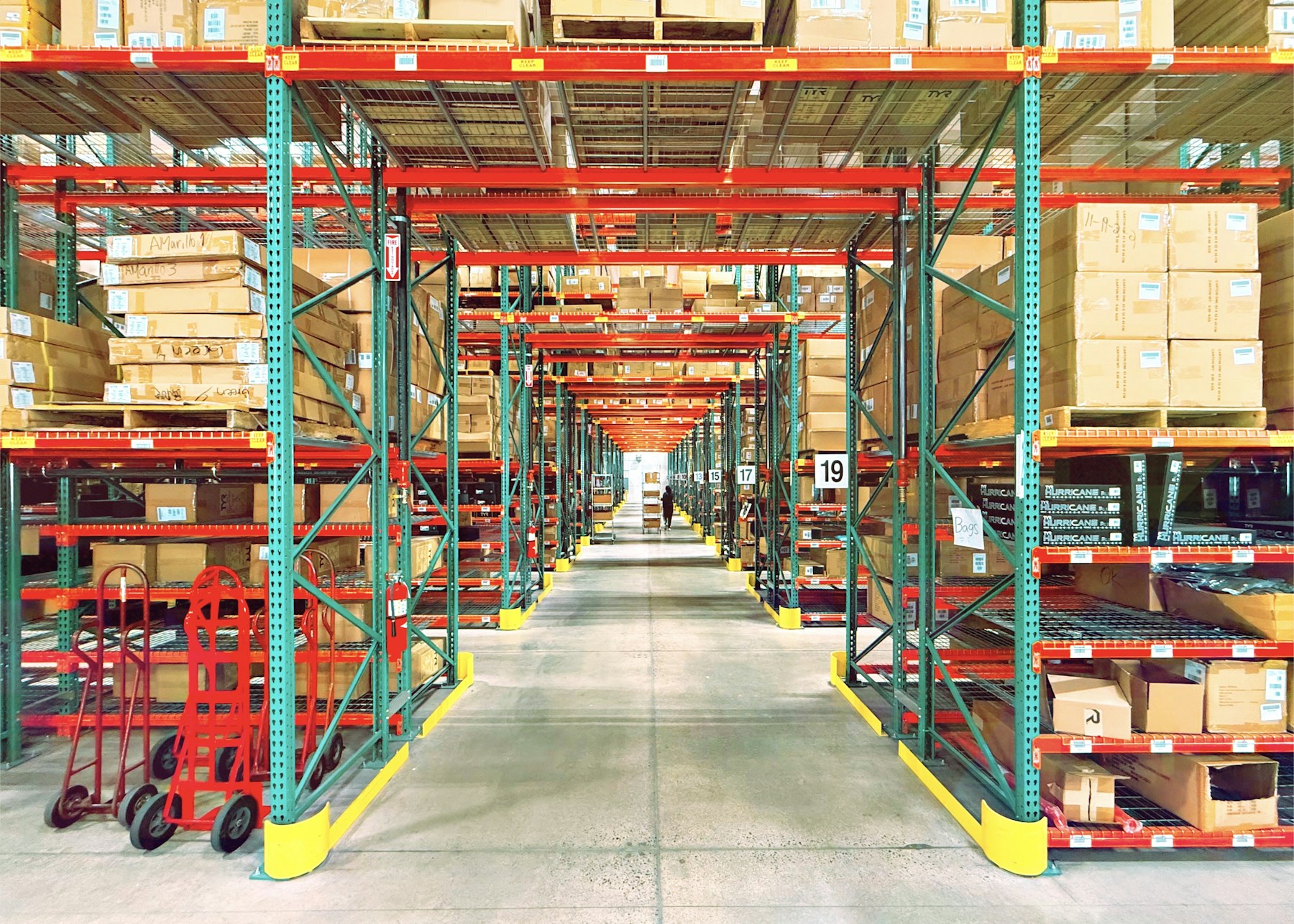
The target participant is a U.S. distribution-center order picker or replenishment associate: a frontline worker who moves through long storage aisles, reads location labels, scans barcodes, selects cases or individual items, builds totes or pallets. This role produces a dense sequence of navigation, hand-object interaction, visual search, and decision-making data from a naturally first-person point of view.
OSHA describes warehousing as a fast-paced environment where lifting, lowering, bending, reaching, pushing, pulling, awkward postures, and repetitive movements can create ergonomic risk. Its guidance distinguishes receiving, case picking, and item picking, and notes that high-volume item picking repeatedly loads the hands, wrists, and shoulders. That context matters: a useful dataset must document the work as it is actually performed without setting a pace, changing a safe lift, or encouraging a participant to repeat a hazardous motion for the camera.
A focused capture protocol can follow one complete work cycle: receive an assigned pick list, travel to the bin, confirm the location, identify the SKU, scan the label, grasp and transfer the item, confirm quantity, place it in a tote or on a pallet, and resolve a missing, damaged, blocked, or mislabeled item. Each sequence should retain both successful routine picks and authentic exceptions because exception recovery is often where perception and planning systems need the most real-world evidence.
EGO R9 fits this workflow as a hands-free head-mounted capture tool. Its 120-degree wide-angle view is designed to keep shelves, labels, hands, packages, and nearby workspace in frame. Global-shutter 1080P video can reduce motion distortion during head turns and walking, while the 6-axis IMU above 200 Hz records motion alongside the visual stream. Shared clock and global timestamp support help teams align video, motion, scanner events, task labels, or a separately logged warehouse route.
For embodied AI and robot imitation learning, the resulting data can support visual search, shelf localization, barcode or package recognition, pick-action segmentation, grasp analysis, tote placement, human-route modeling, and long-horizon task planning. The value is a consistent record of what the worker could see, how hands approached objects, what changed after each action, and which environmental cues preceded a decision.
Data quality starts with a short pilot. Confirm that the camera view includes both hands at normal reach distances; define start and stop markers; synchronize scanner or task-system logs when permitted; record aisle, zone, task type, item size class, and exception labels; and review samples before scaling. Include ordinary variation—different shelf heights, packaging, lighting, carts, gloves, and worker stature—without asking participants to depart from approved work methods.
Worker safeguards belong in the collection design. Participation should be informed and voluntary under the customer's program; recording zones, retention, access, and intended model use should be stated in plain language; bystanders, shipping labels, screens, and customer information should be minimized or de-identified; and recording should pause in restrooms, break areas, or other excluded spaces.
A strong pilot cohort might include experienced order pickers, replenishment associates, and new-hire trainers across day and evening shifts. For procurement teams, the next step is to define the target tasks, facility constraints, consent process, metadata, capture hours, and sample-delivery format, then evaluate an R9 configuration with representative PPE and normal warehouse movement before approving a larger deployment.