Global-shutter imaging
Capture 1080P video at 30 FPS, with 60 FPS and 1920 × 1200 available as optional configurations.
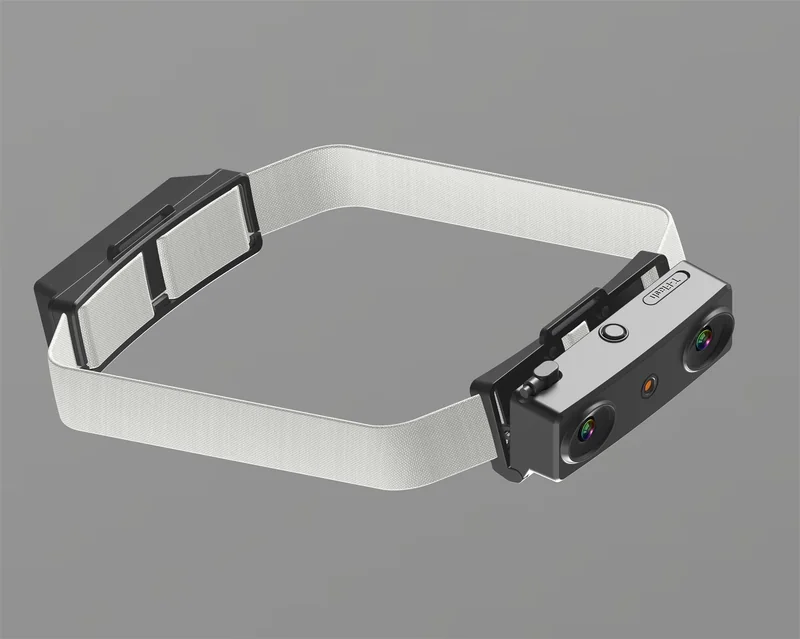
EGO R9 Egocentric Recording Headset
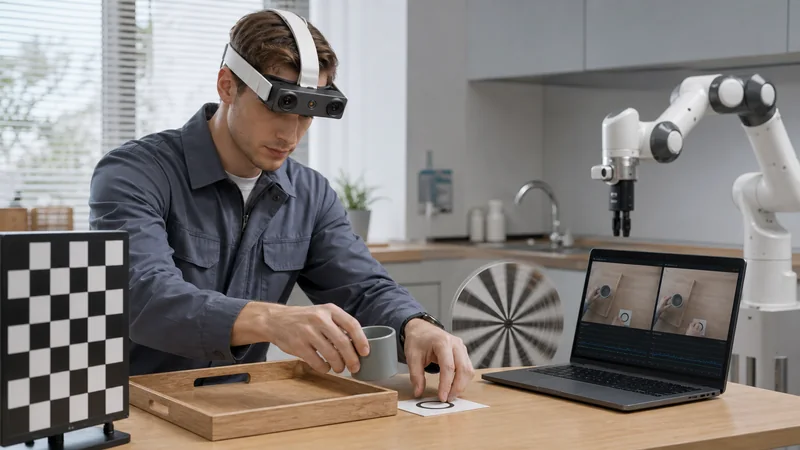
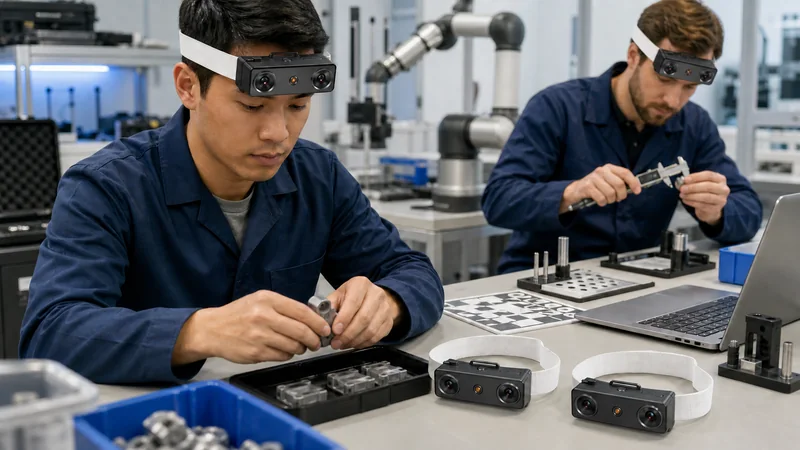
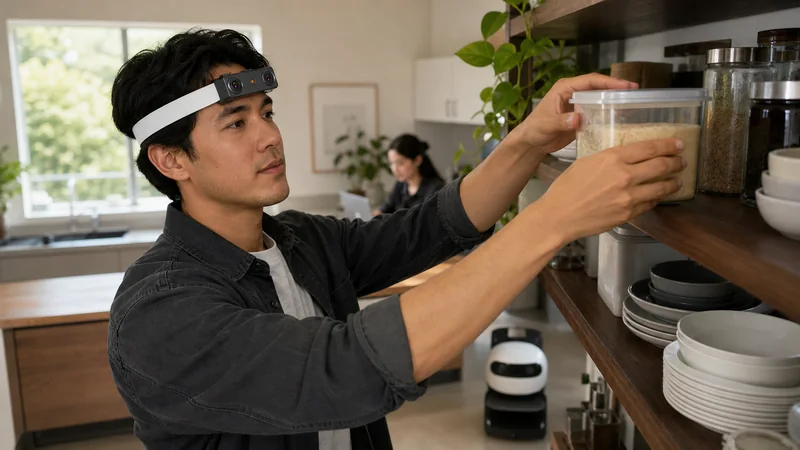
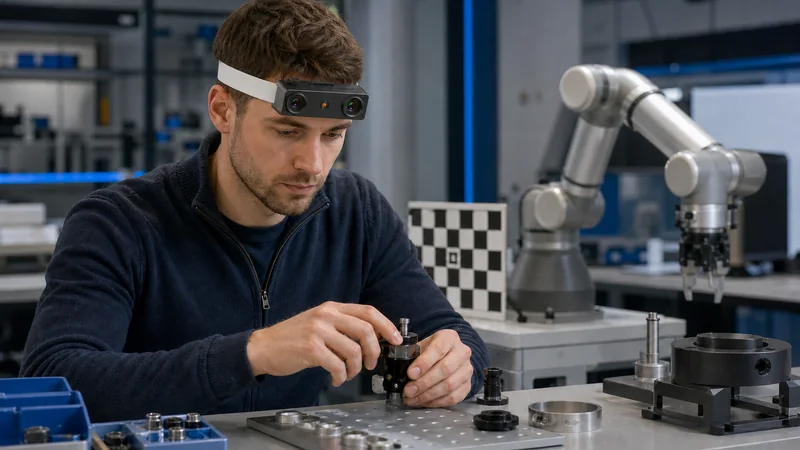
EGO R9 supports embodied AI data collection with 1080P global-shutter video at 30 FPS, a 120° lens, a 6-axis IMU above 200 Hz, shared clock support and global timestamps. Record human demonstration data for robotics with the hands and task context in view.
Capture 1080P video at 30 FPS, with 60 FPS and 1920 × 1200 available as optional configurations.
The integrated IMU samples above 200 Hz for motion-aware SLAM DATA capture and visual-inertial research.
Shared-clock and global-timestamp support helps align image and motion data across a capture workflow.
Type-C, T-Flash storage, microphone, adjustable camera angle, replaceable strap, and external battery support.
R9 specification table
Optional values are identified explicitly. The position-accuracy value below is reproduced as written in the source specification.
| Group | Parameter | R9 specification |
|---|---|---|
| RGB camera | Frame rate | 30 FPS; 60 FPS optional |
| Resolution | 1080P; 1920 × 1200 optional | |
| Shutter type | Global shutter | |
| Field of view | 120° wide-angle lens | |
| Timing & calibration | Synchronized shared unified clock | Supported |
| Global timestamp | Supported | |
| Camera intrinsics | Supported | |
| Adjustable camera angle | Supported | |
| Laser positioning | Supported for operation-area positioning | |
| IMU | Axes | 6-axis |
| Sampling rate | Above 200 Hz | |
| Position accuracy | ≥ 5 mm, as stated in the source PDF | |
| Video & audio | Format | MP4 |
| Resolution | 1080P | |
| Frame rate | 30 FPS; 60 FPS optional | |
| Codec / microphone | H.265 / microphone supported | |
| Interface & wear | USB | Type-C |
| Storage | T-Flash memory card supported | |
| Head strap | Replaceable | |
| External battery | Supported; specification states approximately 5 working hours |
Source: EGO-centric camera R9 specification, supplied July 2026. Confirm optional configuration and final acceptance criteria with the product team.
R9 questions and answers
Answers for teams evaluating EGO R9 for egocentric data collection, human demonstrations and robot-learning research.
R9 records an activity from the camera wearer’s first-person viewpoint. Its documented configuration includes 1080P global-shutter video at 30 FPS and a 120-degree wide-angle lens, providing a visual record of the wearer’s hands, objects and surrounding task context.
Review task framing, video settings, inertial data and timing for the demonstrations you plan to record. R9 combines an adjustable camera angle, a 6-axis IMU sampling above 200 Hz, shared-clock support and global timestamps for a structured first-person capture workflow.
Define an initial task state, the demonstrated steps and a clear finishing condition. Record a short R9 pilot to check hand and object visibility, then collect complete takes with session identifiers and task descriptions. The research team reviews the recordings and adds its own annotations.
The R9 specification lists 1080P at 30 FPS with a global shutter. It also lists 60 FPS and 1920 × 1200 as optional configurations. Keep the delivered configuration and selected video settings with each collection session.
R9 supports a shared clock and global timestamps, alongside its 6-axis IMU. Preserve the recorded timing with the video and available motion data so researchers can relate a demonstration’s visible phases to the wearer’s movement.
R9 supports H.265 MP4 video and T-Flash memory-card storage. Keep the original recordings organized by session and take, with the task description and capture settings. These records give the research team context for first person video data collection and subsequent review.
R9 uses a head-worn camera arrangement with an adjustable camera angle and replaceable strap. This setup lets researchers record the demonstrator’s first-person view while the hands perform the task, supported by the documented video, IMU and timing features.
R9 provides first-person video and associated wearer-motion records for human demonstration capture. For human-to-robot learning or embodied AI data collection, the research team prepares task labels and the action supervision required by its learning method, then trains and evaluates its model using those organized demonstrations.
R9 application blogs
Configuration check
Planning robot training data collection or a hand object interaction dataset? Share the demonstration task, required video mode, timing workflow, quantity and delivery country. Your research team defines the labels and dataset format.